
A bright, well-made illuminated sign does more than display a company name. It helps customers recognize a business, find its location, and connect with its brand. But what goes into creating one of these signs? The finished product may look simple from the street, yet producing an illuminated logo sign takes careful planning, skilled fabrication, quality materials, and attention to detail.
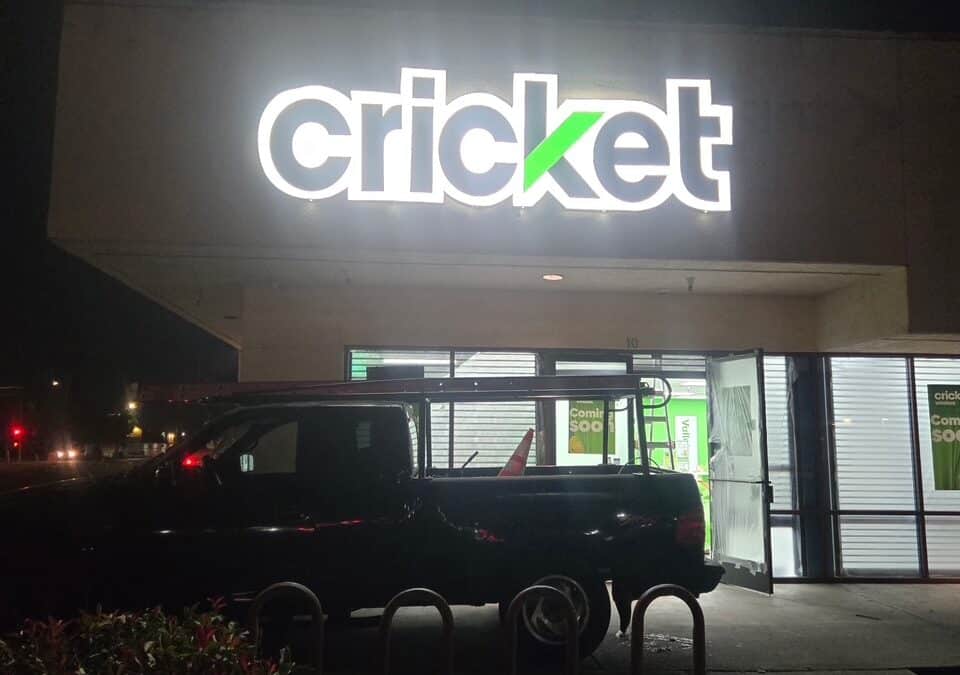
SignWorks recently had the opportunity to work with one of its frequently used fabrication subcontractors on a new illuminated sign who shared a recently completed project he had fabricated for Cricket. The finished installation was a great example of how specialized sign-making talent turns a brand logo into a highly visible storefront feature.
We feel privileged to work with skilled professionals who take pride in their craft. Our subcontractor also shared photographs showing parts of the fabrication process, giving us a closer look at the work behind the finished sign.
Starting with the Right Materials
 Every successful illuminated sign begins with the right materials. The type of material selected depends on the logo design, sign dimensions, lighting requirements, and the appearance the customer wants to achieve.
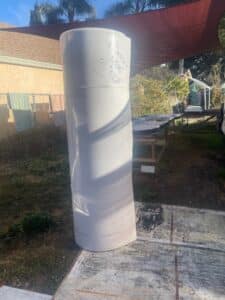
For the Cricket project, the fabrication process began with the arrival of large sheets of sign material. The supplied photograph shows the material rolled for delivery before it was prepared for production.
Material selection is an important part of illuminated sign fabrication. Sign faces must allow light to pass through while providing a clean, even appearance. The materials also need to hold their shape and stand up to the conditions they will face once installed outdoors.
Turning a Logo into a Physical Sign
A company logo may look straightforward on a computer screen, but turning it into a three-dimensional illuminated sign requires specialized production skills.
The logo must be translated into physical components that can be fabricated, assembled, and illuminated. This means paying close attention to letter shapes, spacing, proportions, curves, and smaller design features.
For a brand such as Cricket, maintaining the correct appearance is essential. The finished sign needs to preserve the familiar lettering and green accent while providing consistent illumination across the design.
Depending on the sign construction, fabrication may involve cutting and forming materials, creating letter or logo returns, preparing faces, and assembling the components into a finished unit. Each stage requires precision because small errors can affect the final appearance.
Building in the Illumination
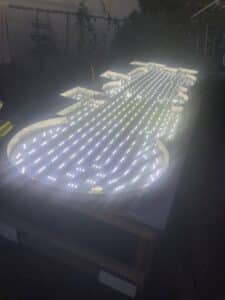 Lighting is what transforms a standard logo sign into an illuminated storefront display. Modern illuminated signs commonly use LED technology because LEDs provide bright, energy-efficient lighting in a compact format.
The lighting system must be planned around the shape and size of the individual letters and logo elements. Proper placement helps reduce dark areas, uneven brightness, and unwanted shadows.
Electrical components also need to be installed and connected correctly. The goal is a sign that looks balanced when switched on, with the logo clearly visible after dark.
The finished Cricket sign demonstrates the impact of this work. Its bright white lettering and green accent stand out against the building fascia, creating a strong visual feature that can be seen at night.
The Value of Skilled Sign Fabricators
Sign fabrication is a specialized trade. Producing custom illuminated logos requires equipment, experience, and the ability to work with materials that may need to be cut, shaped, finished, and assembled in very specific ways.
SignWorks regularly works with experienced subcontractors who bring these skills to projects that require specialized production. These partnerships allow us to coordinate custom signage while relying on fabricators who understand the details behind quality construction.
We especially appreciate the opportunity to see photographs from the production floor. Images taken during fabrication provide a look at the steps that customers rarely get to see. They also show the care and craftsmanship that go into a finished sign.
From the Fabrication Shop to the Storefront
Once fabrication and assembly are complete, the sign can move toward installation. The finished unit must be prepared for mounting, electrical connection, and alignment with the building’s exterior.
Installation is another important stage. The sign needs to sit correctly on the building, remain secure, and present the logo at the intended size and position. Proper coordination helps bring together the work completed by the fabricator and the requirements of the installation site.
The completed Cricket sign shows how the different stages come together. What began as raw sign material became a bright, recognizable storefront logo that supports the business’s exterior branding.
SignWorks: Connecting Great Design with Great Fabrication
Custom illuminated signs are a combination of design, materials, technology, and craftsmanship. Whether a project calls for illuminated channel letters, a custom logo sign, or a complete storefront sign package, the quality of fabrication makes a difference.
At SignWorks, we value the relationships we have built with talented subcontractors throughout the signage industry. Their experience helps us deliver specialized signs for businesses and property owners across the Bay Area.
The new Cricket sign is a reminder that excellent signage is a team effort. We are grateful to work alongside skilled fabricators who take pride in their work and share a behind-the-scenes look at the process. The finished sign may be what customers notice first, but the craftsmanship behind it is what makes the result possible.